









Planning a Dynamics project often starts with the same question: how much is this going to cost us? It sounds simple, but the answer is rarely a single number. The total investment depends on your business goals, project scope, system complexity, internal readiness, and the kind of partner you choose.
That is why many businesses struggle with budgeting early on. Some expect the project cost to be close to the software licensing alone. Others receive a rough estimate, approve it too quickly, and later find that integrations, data cleanup, change requests, and support were never fully accounted for. The result is frustration, budget pressure, and a rollout that becomes harder than it should be.
A realistic approach to Microsoft Dynamics implementation cost starts with understanding what you are actually paying for. It is not just the setup of a system. It is the design, configuration, testing, migration, training, support, and business change required to ensure the platform works properly in your environment.
Why budgeting for Dynamics is often misunderstood
Many companies assume implementation pricing follows a flat model. They expect a standard package, a fixed delivery timeline, and a simple quote that covers everything. In reality, no two implementations are exactly the same.
Dynamics can support a wide range of business areas, including finance, operations, sales, customer service, commerce, and field service. One company may need a focused CRM rollout for a single region. Another may require a multi-country ERP transformation with integrations, compliance controls, and complex approval flows. The cost profile between the two will be very different.
This is why budgeting needs to be based on business requirements, not assumptions. A realistic plan starts with understanding the project’s shape before locking in numbers.
What usually makes up the total implementation cost
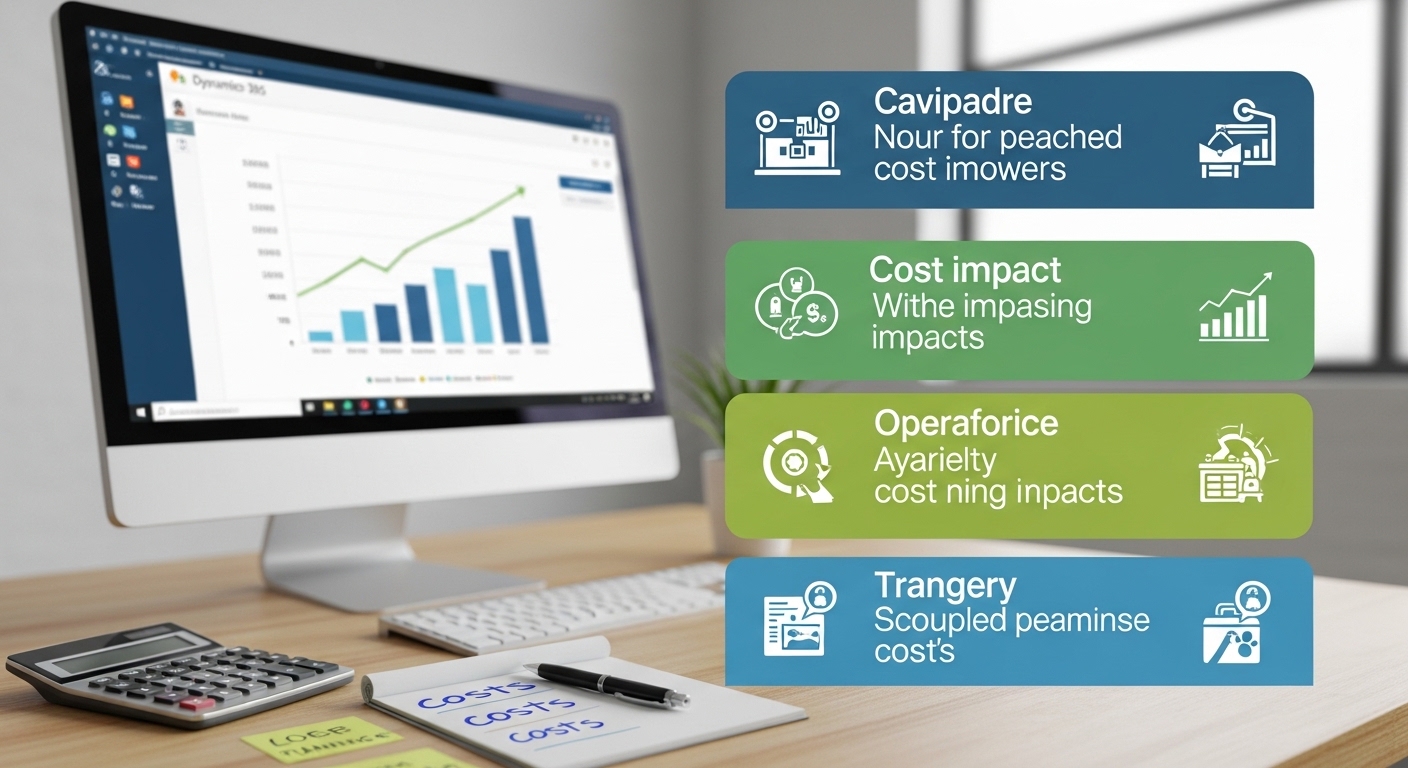
A proper budget should reflect more than the consulting fee. There are several cost layers, and ignoring one of them is where planning often breaks down.
Discovery and planning
This is the early phase where business requirements are gathered, current pain points are reviewed, and the future solution approach is shaped. Some companies treat this as optional, but weak planning usually leads to higher costs later through rework and confusion.
Solution design and configuration
This includes how Dynamics is structured around your workflows, roles, data needs, reporting logic, and process requirements. Even when standard features are used, there is still effort required to align them with the business.
Customization and extensions
Not every business need can or should be handled through standard configuration alone. Some projects require custom workflows, tailored forms, special automation, or extensions to support unique operations. These additions increase cost and should be carefully justified.
Data migration
Moving data from legacy systems into Dynamics is one of the most underestimated parts of implementation. The cost is not just in transferring records. It also includes reviewing data quality, cleansing duplicates, mapping formats, validating results, and resolving gaps.
Integrations
Many businesses need Dynamics to connect with finance tools, e-commerce systems, payroll platforms, reporting tools, third-party apps, or internal software. Integration complexity can have a major impact on total cost.
Testing and quality assurance
Testing is not just a final check before launch. It is essential for validating workflows, data, roles, reports, integrations, and user scenarios. If testing is rushed, issues usually surface after go-live when they become more expensive to fix.
Training and change support
Users need to understand not only what has changed, but how the new system supports their day-to-day work. Training, documentation, workshops, and support during transition all carry cost, but they also protect the value of the investment.
Post-go-live support
After launch, businesses often need hypercare, issue resolution, performance tuning, and continuous improvement. A budget that stops at go-live is often incomplete.
The biggest factors that influence project cost
There is no universal number because cost depends on several moving parts. The more clearly you understand them, the better your planning will be.
Scope of implementation
A focused implementation costs less than a broad transformation. If you are rolling out one module, one department, or one region, the project is usually easier to manage. If the project spans multiple business units, legal entities, countries, or functions, the effort grows quickly.
Even within a single module, complexity can vary. Two businesses may both use finance, but one may have simple processes, while the other has layered approvals, tax requirements, intercompany transactions, and heavy reporting requirements.
Level of process complexity
The more exceptions, manual workarounds, and custom business rules your organization currently relies on, the more effort it usually takes to design the new system properly. A provider will need to understand those details, decide what to standardize, and determine what genuinely needs tailoring.
Condition of your existing data
Clean data lowers risk and saves time. Poor data increases effort across migration, testing, reporting, and user adoption. If customer records, vendor lists, inventory data, or financial dimensions are inconsistent, the project team will spend more time fixing issues before migration can happen safely.
Number of integrations
Every system that connects to Dynamics adds effort. Some integrations are straightforward. Others require custom logic, middleware, security planning, and detailed testing. Businesses often underestimate this area because they focus first on the core platform and forget how connected their environment already is.
Internal team readiness
If your internal stakeholders are available, responsive, and clear on priorities, implementation tends to move more smoothly. If decision-making is slow, requirements are unclear, or process owners are not aligned, project delays can increase cost.
Delivery model and partner experience
Some providers offer lower rates but require more oversight, more clarification, and more correction during delivery. Others may cost more upfront but reduce risk through better discovery, stronger governance, and more accurate execution. The cheapest proposal is not always the most cost-effective one.
Where budgets usually go wrong
A realistic guide should not just explain the budget. It should also explain where it fails.
Underestimating change requests
Many projects begin with a rough scope and evolve as stakeholders see the system in detail. New reporting needs appear. Workflow expectations shift. Extra integrations are requested. Without strong scope control, these changes can quickly expand cost.
Assuming customization is harmless
Customization is sometimes necessary, but too much of it can increase development effort, testing effort, support complexity, and future upgrade costs. It is important to separate real needs from preferences.
Ignoring internal effort
Implementation is not paid for only through invoices from the partner. Your own team will spend time in workshops, reviews, testing, training, and decision-making. That time has value and should be considered in project planning.
Leaving out post-launch costs
A system does not become fully stable the moment it goes live. Budgeting should include a support period after launch, along with room for optimization once users begin working in the system daily.
How to plan a more accurate budget from the start
The goal is not to predict every detail perfectly. It is to create a budget that is informed, practical, and flexible enough to handle reality.
Begin with business priorities
Start by identifying what the implementation must achieve in phase one. Be clear about what is essential, what can wait, and what would be nice to have later. This helps control scope and keeps the first phase focused.
Separate core needs from optional items
A common budgeting mistake is treating every request as equally urgent. Break your requirements into categories:
Must-have items
These are needed for the system to function properly at launch.
Important but not critical items
These may improve efficiency but can be delivered later.
Future enhancements
These should be tracked, but not forced into the first project phase unless there is a strong business case.
Ask for cost transparency
A provider should be able to break down the estimate into meaningful work areas. You should understand how much effort is going into discovery, configuration, migration, integrations, testing, training, and support. A single lump sum without explanation makes it harder to assess risk.
Build in contingency
Even well-planned implementations face adjustments. A realistic budget usually includes contingency for unexpected data issues, extra testing effort, minor scope refinement, or integration complexity. This is not wasted budget. It is protection against avoidable disruption.
Use phased delivery where it makes sense
Not every business needs a full rollout at once. A phased approach can reduce pressure, improve control, and spread investment across stages. It also gives teams time to learn from the first phase before expanding further.
Questions to ask before approving a budget
Good budgeting depends on asking better questions.
What is included in the estimate?
Do not assume everything is covered. Confirm whether migration, testing support, training, documentation, integrations, and post-go-live support are included.
What assumptions is the estimate based on?
Every estimate includes assumptions. You need to know what they are. If those assumptions change later, the cost may change too.
What would increase the budget?
A good implementation partner should be open about the likely cost drivers, such as custom development, complex integrations, shifting requirements, or delayed feedback from internal teams.
What is the support model after launch?
This helps you understand whether support is included temporarily, billed separately, or offered through an ongoing service model.
Final thoughts
A realistic budget is not built by chasing the lowest estimate. It is built by understanding scope, complexity, internal readiness, and long-term needs. When businesses plan carefully, they make better decisions, avoid surprises, and get more value from the implementation.
Dynamics can deliver strong business outcomes, but only when the project is scoped and budgeted with honesty. The more clearly you define priorities, evaluate complexity, and ask the right questions early, the more confident your investment planning will be.
A smart implementation budget is not just about controlling cost. It is about funding the right work, at the right time, in the right way.