









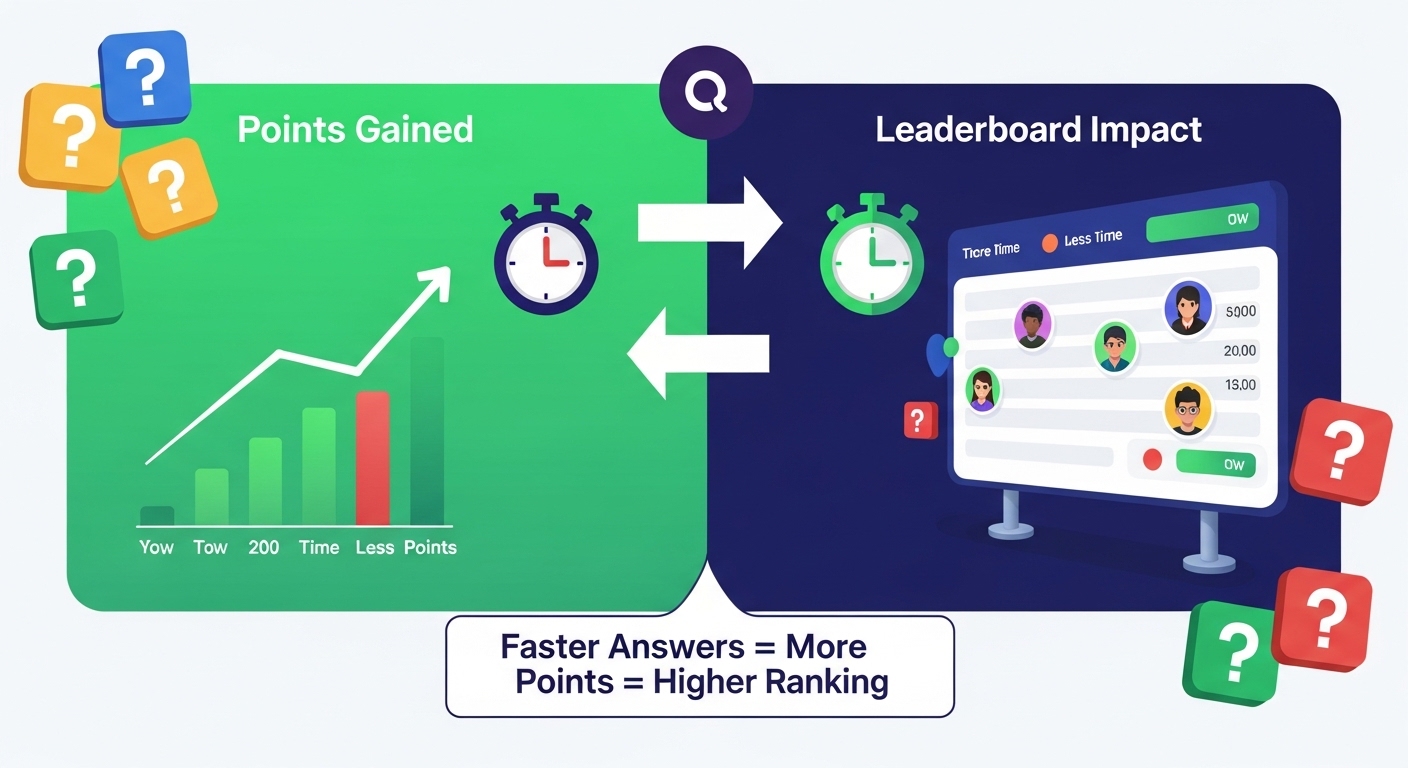
The first time a teacher notices a classroom suddenly lean forward in unison, it’s rarely because of a lecture slide. It’s because the clock is ticking. A quiet sense of urgency fills the room, students focus, and even the most distracted learners are suddenly present. That moment captures the true power of the quizizz time limit—not as a countdown, but as a catalyst for attention, motivation, and meaningful interaction.
In a world where digital tools shape how we learn and evaluate knowledge, timing has become more than a technical setting. It is a strategic choice that influences behavior, performance, and outcomes. Understanding how time limits work inside platforms like Quizizz can help educators, founders, and tech-savvy professionals design better learning and assessment experiences.
Why Time Pressure Changes How People Think
Human decision-making shifts when time is limited. Cognitive research shows that deadlines push the brain to prioritize, reduce overthinking, and rely on recall rather than guesswork. In learning environments, this can be a double-edged sword. Too much pressure causes anxiety, but the right amount creates focus.
The quizizz time limit operates in this sweet spot when used intentionally. Instead of encouraging rote memorization, it nudges learners to trust their understanding. For entrepreneurs and founders who run training sessions or internal assessments, this mirrors real-world conditions where decisions are rarely made without constraints.
The Role of Quizizz Time Limit in Modern Learning Design
Digital learning platforms succeed when they reflect real-life challenges. Meetings have agendas, product launches have deadlines, and exams have closing times. The quizizz time limit brings this realism into quizzes without sacrificing engagement.
Unlike traditional testing environments, Quizizz allows flexibility. Time can be adjusted per question, applied across an entire quiz, or removed entirely. This adaptability makes the platform useful not just in classrooms, but also in corporate training, onboarding programs, and skill validation exercises.
For tech readers and founders, this matters because learning outcomes are tied directly to how information is consumed. A well-set time limit transforms passive content into an active experience.
Balancing Speed and Accuracy Without Stress
One of the most common misconceptions about timed quizzes is that they reward speed over understanding. In practice, the opposite often happens when the quizizz time limit is calibrated thoughtfully.
Short, clear questions with moderate time windows encourage confident answers. Longer or scenario-based questions benefit from extended limits that allow reflection. The key is alignment between question complexity and available time.
When learners feel the time is fair, they remain engaged instead of anxious. This balance is critical in professional environments where assessments are meant to measure competence, not induce pressure.
Quizizz Time Limit and Learner Motivation
Motivation thrives on momentum. A visible countdown creates rhythm, helping participants stay in flow. Without a time limit, quizzes can feel endless, leading to distraction or disengagement.
The quizizz time limit introduces a game-like dynamic that motivates without trivializing the content. Learners feel a sense of progress as they move from question to question, which is especially effective in group settings where energy and participation matter.
For founders running workshops or product training, this motivation translates into better retention and more accurate feedback.
When Removing the Time Limit Makes Sense
While timing is powerful, there are scenarios where removing it entirely is the smarter choice. Complex problem-solving tasks, reflective assessments, or accessibility-focused quizzes often benefit from open timing.
The strength of the quizizz time limit lies in choice. By removing pressure when depth is required, creators can shift the focus from performance to understanding. This flexibility is particularly valuable in inclusive learning environments or during exploratory sessions where experimentation is encouraged.
Comparing Different Timing Strategies in Practice
Timing strategies vary based on goals, audience, and context. The table below illustrates how different quizizz time limit approaches influence outcomes in real-world scenarios.
| Timing Approach | Best Use Case | Impact on Learners |
|---|---|---|
| Short per-question limits | Quick recall checks and reviews | Increases focus and confidence |
| Moderate per-question limits | Conceptual understanding quizzes | Balances accuracy and speed |
| Overall quiz time limit | Competitive or live sessions | Builds momentum and excitement |
| No time limit | Deep learning and reflection | Reduces anxiety and supports inclusion |
This comparison highlights that there is no single “correct” setting. Effectiveness comes from matching timing to intent.
How Entrepreneurs and Founders Use Quizizz Time Limit Strategically
Beyond education, the quizizz time limit has found relevance in business contexts. Startups use timed quizzes to assess onboarding knowledge. Product teams run quick checks during training sessions. HR departments evaluate skill readiness under realistic constraints.
Timing mirrors the pace of modern work environments. When assessments feel authentic, results become more actionable. Founders gain insights not just into what employees know, but how they perform under pressure.
This is particularly useful in fast-moving industries where decision speed matters as much as accuracy.
Avoiding Common Mistakes With Time Limits
The most frequent error is applying the same time limit to every question without considering difficulty. Another mistake is using extremely short limits to create artificial challenge, which can alienate learners rather than motivate them.
Effective use of the quizizz time limit requires empathy. Designers should imagine themselves answering the questions. Does the time feel reasonable? Does it support the learning goal?
When timing serves the learner instead of controlling them, engagement rises naturally.
Accessibility and Fairness in Timed Quizzes
Modern learning design must account for diverse needs. Some learners process information more slowly, while others may face language or accessibility barriers. The quizizz time limit can be adjusted to accommodate these differences without compromising standards.
Providing extended time or optional untimed versions ensures fairness. This approach aligns with inclusive design principles and strengthens trust between facilitators and participants.
For organizations, fairness is not just ethical—it improves data quality by ensuring results reflect knowledge rather than stress.
The Psychological Effect of Control Over Time
Giving creators control over timing shifts power dynamics. Instead of rigid exams, quizzes become tools shaped by intention. Learners sense this control and respond positively when timing feels purposeful.
The quizizz time limit is most effective when it feels invisible—supporting the experience rather than dominating it. When participants remember the insight they gained instead of the pressure they felt, timing has done its job.
Looking Ahead: Timing as a Design Philosophy
As digital platforms evolve, timing will remain central to user experience. Whether in education, training, or product onboarding, the way time is structured influences how people engage with content.
The quizizz time limit represents a broader shift toward intentional design. It reminds us that learning is not just about content delivery, but about creating conditions where focus, motivation, and understanding can thrive together.
Conclusion
At its best, the quizizz time limit is not a countdown to failure, but an invitation to focus. It sharpens attention, mirrors real-world challenges, and transforms quizzes into meaningful experiences.
For educators, entrepreneurs, and tech leaders, mastering timing is less about control and more about design. When time supports purpose, learning becomes faster, deeper, and more human.