






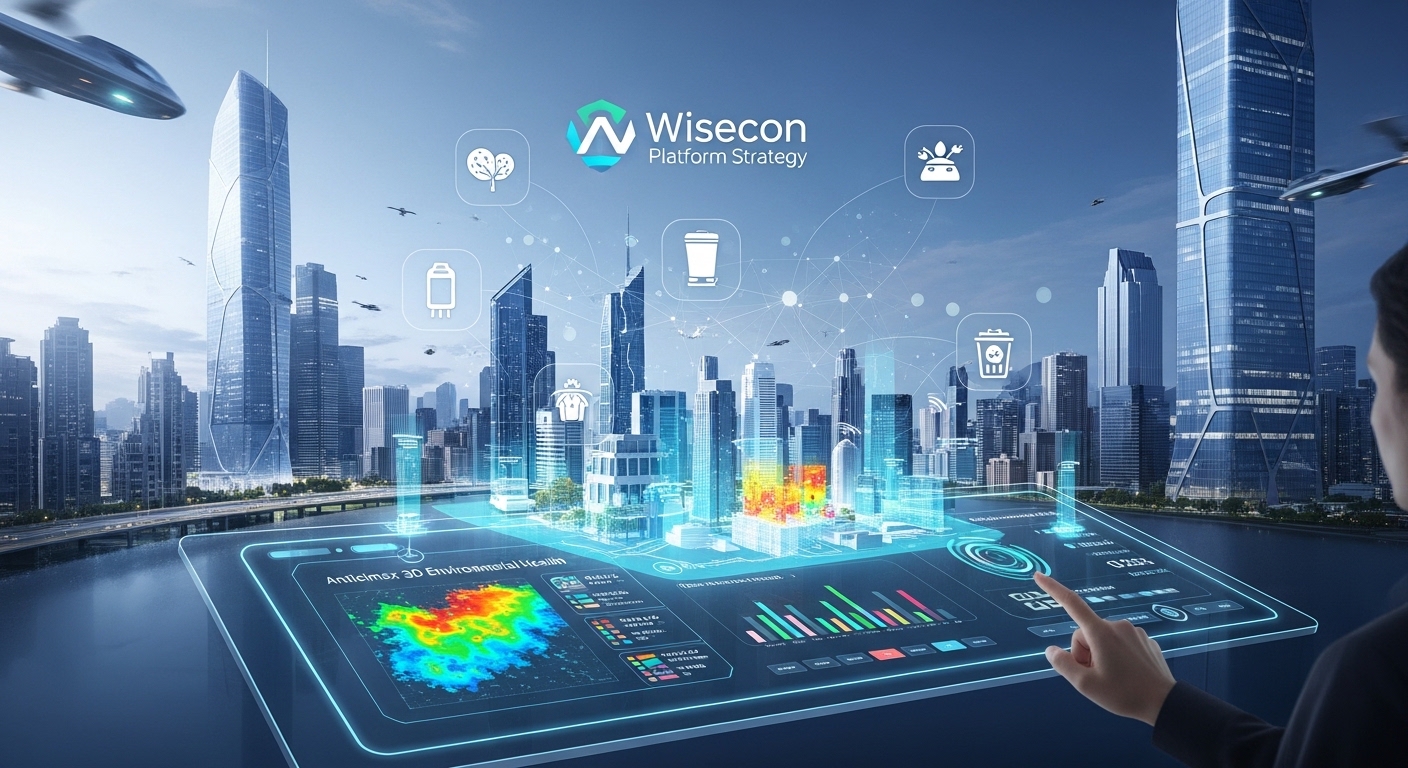
The story begins in a place most people never see: a quiet warehouse on the edge of a city, where sensors hum softly and data dashboards glow in real time. A facilities manager checks an alert on her phone—no panic, no disruption—just a calm confirmation that a potential pest risk has been detected and neutralized before it could become a problem. This is not the old world of reactive sanitation. This is the new, connected reality shaped by anticimex 3d sanidad ambiental / wisecon estrategia de plataforma, where environmental health becomes predictive, digital, and strategically integrated into business operations.
For entrepreneurs and tech-minded founders, this shift matters more than it might seem at first glance. Sanitation and pest control are no longer background services. They are part of a broader platform economy that values data, transparency, and resilience. Understanding how this transformation works—and why it is gaining momentum—offers insight into how traditional industries evolve when technology and strategy align.
From Reactive Control to Intelligent Environmental Health
For decades, environmental sanitation followed a familiar pattern. A problem appeared, a service was called, and action was taken. The model worked, but it was inefficient, disruptive, and often expensive in the long run. What changed was not just technology, but mindset. Companies began to ask why issues were being addressed after the fact rather than anticipated before they escalated.
This is where the concept behind anticimex 3d sanidad ambiental / wisecon estrategia de plataforma becomes relevant. The shift is toward intelligent environmental health systems that combine monitoring, analytics, and strategic planning. Sensors, connected devices, and cloud platforms allow organizations to see patterns over time, understand risk factors, and intervene with precision. Instead of blanket treatments or routine checks, actions are informed by real data and contextual insight.
The result is a quieter form of innovation. There are fewer emergencies, less waste, and more confidence in compliance and safety. For businesses operating in regulated environments—food production, hospitality, healthcare—this evolution is not optional. It is becoming a baseline expectation.
The Role of Anticimex in the 3D Sanidad Ambiental Model
At the center of this transformation is the idea of “3D sanidad ambiental,” a model that integrates detection, decision-making, and digitalization. Rather than relying solely on human inspection, systems are designed to observe continuously and report intelligently. Anticimex has been a prominent driver of this approach, blending traditional expertise with modern technology.
What makes this model compelling is its balance. It does not discard decades of field knowledge; instead, it amplifies it. Technicians still matter, but they are supported by data that guides their actions. Digital traps, remote monitoring, and predictive analytics reduce guesswork and improve outcomes. Over time, this creates a feedback loop where each intervention improves the system’s understanding of the environment.
For founders watching this space, the lesson is clear. Innovation does not always mean disruption through replacement. Sometimes it means elevation—taking what already works and making it smarter, more efficient, and more transparent.
Wisecon Estrategia de Plataforma: Turning Services into Systems
Technology alone, however, does not create transformation. Strategy does. This is where the platform perspective becomes essential. The wisecon estrategia de plataforma approach reframes environmental sanitation as an ecosystem rather than a standalone service. Data flows between devices, analytics engines, service teams, and client dashboards, creating a unified operational picture.
A platform strategy enables scalability. Once the infrastructure is in place, new locations, clients, or services can be added without reinventing the wheel. It also encourages innovation at the edges. Third-party integrations, customized reporting, and advanced analytics can be layered onto the core system, increasing value over time.
For entrepreneurs, this mirrors trends seen in fintech, logistics, and health tech. The most successful players are not those who sell isolated solutions, but those who build platforms that others can rely on. In this context, sanitation becomes part of a larger digital backbone supporting safety, compliance, and operational excellence.
Real-World Relevance for Modern Businesses
The practical impact of anticimex 3d sanidad ambiental / wisecon estrategia de plataforma is easiest to see in complex, high-risk environments. Consider a multinational food manufacturer. A single contamination incident can lead to recalls, reputational damage, and regulatory penalties. Predictive environmental monitoring reduces that risk dramatically by identifying vulnerabilities early.
Hospitality chains face a different challenge: consistency. Guests expect the same standards in every location. A centralized platform strategy ensures uniform monitoring and reporting, making quality control measurable rather than subjective. Healthcare facilities benefit from continuous oversight that supports infection prevention protocols without adding administrative burden.
In each case, the value is not just operational. It is strategic. Data-driven sanitation becomes a competitive advantage, signaling professionalism and trustworthiness to partners, regulators, and customers alike.
How the Platform Model Compares to Traditional Approaches
To understand the magnitude of this shift, it helps to compare traditional sanitation services with a platform-based strategy. The differences go beyond tools and touch on philosophy, accountability, and long-term value.
| Aspect | Traditional Sanitation Services | Platform-Based Environmental Health |
|---|---|---|
| Monitoring | Periodic, manual inspections | Continuous, sensor-driven observation |
| Response | Reactive, issue-based | Predictive and preventive |
| Data Usage | Minimal historical analysis | Centralized analytics and insights |
| Scalability | Limited by human resources | Enabled through digital infrastructure |
| Strategic Value | Operational necessity | Competitive and reputational asset |
This comparison highlights why founders and tech leaders are paying attention. The platform model aligns with broader digital transformation goals, making sanitation part of the strategic conversation rather than an afterthought.
Data, Trust, and Transparency in Environmental Health
One of the less obvious but most powerful outcomes of this approach is trust. When clients can access dashboards showing real-time conditions, intervention history, and risk assessments, the relationship changes. Transparency replaces assumption. Decisions are grounded in evidence rather than reassurance.
From a governance perspective, this is invaluable. Audits become smoother because data is readily available. Compliance reporting is simplified. Even internal stakeholders gain confidence, knowing that environmental health risks are being managed proactively.
For tech readers, this echoes familiar themes. Data is not just about optimization; it is about credibility. Platforms that make invisible processes visible create trust, and trust is a currency that compounds over time.
Why Entrepreneurs Should Care About This Shift
At first glance, environmental sanitation may seem far removed from startup culture or platform economics. In reality, it is a case study in how digital strategy reshapes even the most established industries. The principles behind anticimex 3d sanidad ambiental / wisecon estrategia de plataforma—connectivity, data integration, scalability—are the same principles driving success across sectors.
Entrepreneurs can draw several lessons. First, platform thinking can unlock value in unexpected places. Second, combining domain expertise with technology creates defensible advantages. Third, long-term impact often comes from improving reliability and prevention rather than chasing novelty.
These insights are particularly relevant for founders building B2B solutions, where trust, compliance, and operational efficiency matter as much as innovation speed.
The Future of Intelligent Sanitation Platforms
Looking ahead, the trajectory is clear. Environmental health platforms will become more predictive, integrating machine learning to identify patterns humans might miss. Cross-platform data sharing could link sanitation insights with supply chain, facilities management, and even employee health systems. The boundaries between services will continue to blur.
What will remain constant is the strategic value of foresight. Businesses that invest in intelligent, platform-based sanitation are not just avoiding problems. They are building resilience into their operations. In a world where disruptions are increasingly costly, that resilience is a form of leadership.
The evolution represented by anticimex 3d sanidad ambiental / wisecon estrategia de plataforma is not about technology for its own sake. It is about redefining how organizations care for the environments in which they operate—and how they use data and strategy to do so responsibly.
Conclusion
Environmental sanitation rarely makes headlines, yet it underpins public health, brand trust, and operational stability. By applying platform strategy and digital intelligence, leaders are transforming it from a reactive service into a proactive system. The collaboration between advanced environmental health models and platform thinking shows how even the most traditional functions can evolve when approached strategically.
For entrepreneurs and tech leaders, the takeaway is simple but powerful. Innovation does not always announce itself loudly. Sometimes it works quietly in the background, preventing problems before they occur and creating value that only becomes obvious when it is absent. That quiet reliability may be one of the most strategic assets a modern organization can build.