









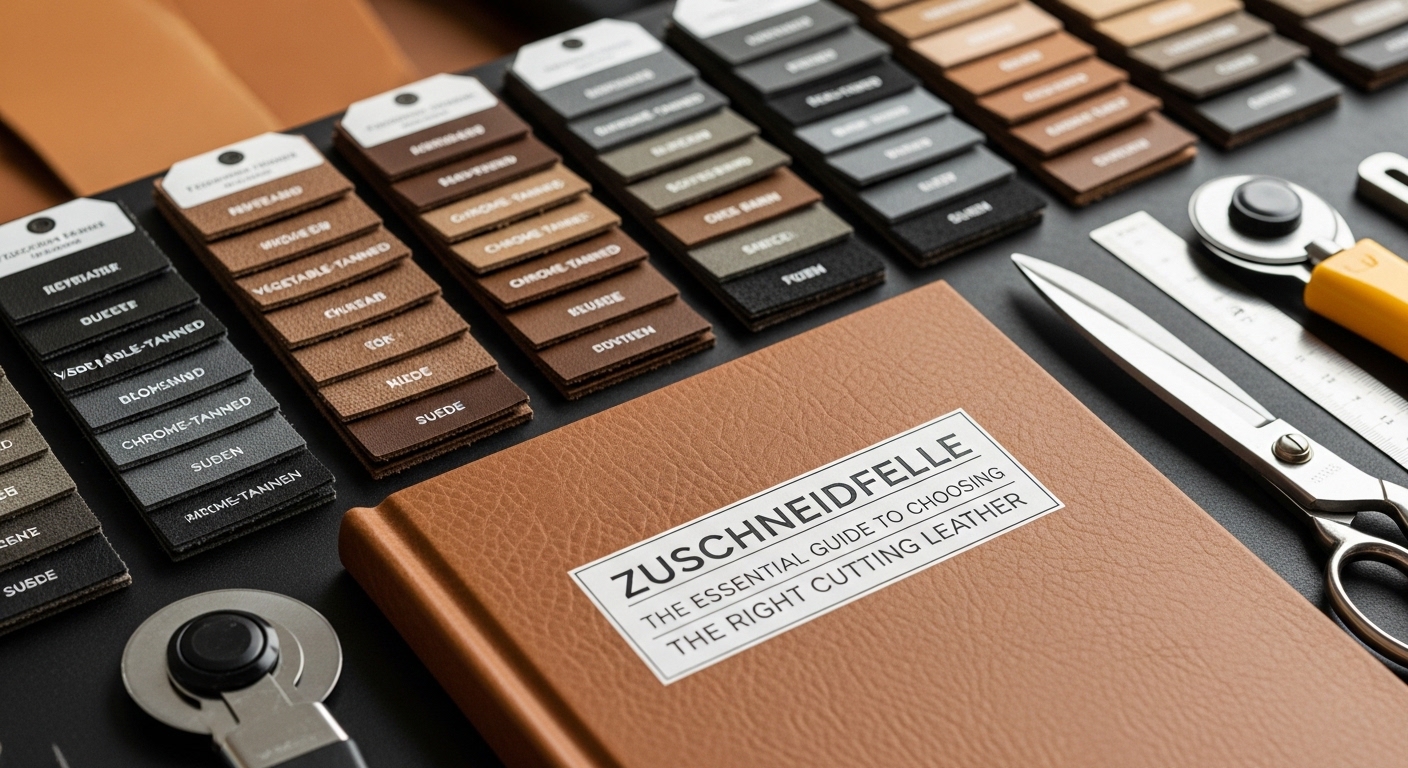
On a quiet morning inside a small European workshop, a leather cutter runs their hand across a supple surface laid carefully on a cutting table. The material is smooth, consistent, and ready—no surprises, no hidden flaws. This is not a random hide pulled from storage. It is a Zuschneidfelle, selected and prepared with intent. For artisans, manufacturers, and increasingly for founders building product-driven brands, Zuschneidfelle represent something more than raw material. They are a promise of predictability in a world where quality is often inconsistent.
In today’s economy, where craftsmanship meets scalable production and tradition meets technology, Zuschneidfelle have quietly become a strategic asset. Understanding why they matter—and how they fit into modern business thinking—offers a revealing look into how even the most traditional materials are being redefined.
Understanding Zuschneidfelle in a Modern Context
At its core, Zuschneidfelle refers to prepared leather hides that are optimized for cutting and production. Unlike untreated or irregular raw hides, these materials are processed, graded, and often trimmed to support efficient use in manufacturing. What once served mainly traditional leatherworkers has now found relevance across industries that value consistency, speed, and waste reduction.
In practical terms, Zuschneidfelle allow makers to focus on design and execution rather than problem-solving around material defects. For entrepreneurs and founders, this reliability translates into predictable costs, fewer delays, and scalable workflows. In a market that rewards speed without sacrificing quality, those advantages matter.
Why Zuschneidfelle Matter Beyond Craftsmanship
The relevance of Zuschneidfelle extends far beyond artisanal workshops. Modern brands—especially those operating in premium consumer goods—depend on materials that align with both creative vision and operational reality. Whether producing small batches of luxury accessories or larger product lines, the ability to cut efficiently from well-prepared hides can define profit margins.
There is also a branding dimension. Customers today are deeply aware of material quality. They notice how a product feels, ages, and performs over time. Zuschneidfelle support this expectation by offering uniformity without stripping away the natural character that gives leather its appeal.
Zuschneidfelle and the Economics of Waste Reduction
One of the most overlooked aspects of Zuschneidfelle is their role in minimizing waste. Traditional leather cutting often results in significant offcuts due to irregular shapes and hidden flaws. Prepared cutting hides reduce this uncertainty, allowing patterns to be planned with precision.
For businesses, this efficiency is not just environmental—it is financial. Less waste means better yield per hide, clearer pricing models, and stronger sustainability narratives. In an era where investors and consumers alike scrutinize supply chains, Zuschneidfelle help bridge ethics and economics.
How Technology Has Elevated Zuschneidfelle
The evolution of Zuschneidfelle is closely tied to advances in processing technology. Modern tanning, grading, and surface analysis tools allow suppliers to assess hides with remarkable accuracy. Digital mapping can now identify usable areas before a single cut is made, turning leather into a data-informed material.
This technological layer appeals strongly to tech-minded founders. Zuschneidfelle fit neatly into digitally optimized production environments where planning software, CNC cutting systems, and inventory analytics converge. The result is a traditional material operating at modern speed.
Zuschneidfelle in Product Design and Brand Strategy
Designers often speak about “material honesty”—letting the nature of a material guide the product rather than forcing it into a concept. Zuschneidfelle support this philosophy by offering a clear understanding of what the material can deliver.
For brand strategists, this clarity simplifies storytelling. When materials are consistent, brands can confidently promise durability, texture, and finish. Zuschneidfelle make it easier to align marketing claims with actual product experience, reducing the risk of disappointment and returns.
Comparing Zuschneidfelle with Conventional Leather Hides
To understand their strategic value, it helps to look at how Zuschneidfelle differ from conventional hides used in production.
| Aspect | Zuschneidfelle | Conventional Leather Hides |
|---|---|---|
| Preparation Level | Pre-processed and graded | Often raw or minimally sorted |
| Cutting Efficiency | High, predictable layouts | Variable, requires adjustment |
| Waste Generation | Lower due to consistency | Higher due to irregularities |
| Scalability | Well-suited for growth | Challenging at scale |
| Cost Predictability | Stable and forecastable | Fluctuates with defects |
This comparison highlights why Zuschneidfelle appeal to growth-oriented businesses. They reduce uncertainty, which is often the hidden cost in production-heavy ventures.
Zuschneidfelle and Sustainable Business Thinking
Sustainability is no longer a side conversation; it is central to modern business credibility. Zuschneidfelle contribute to sustainability not through marketing claims, but through measurable impact. Efficient cutting means fewer hides are needed to produce the same number of goods. That efficiency cascades backward through the supply chain, reducing resource use at every stage.
For founders pitching to conscious investors or selling to environmentally aware consumers, offer substance behind sustainability narratives. They demonstrate that responsibility can coexist with profitability.
Global Demand and the Future of Zuschneidfelle
As global markets become more interconnected, demand for standardized, high-quality materials continues to rise. Zuschneidfelle sit at the intersection of global trade and local craftsmanship. They allow small brands to compete internationally without compromising on material standards.
Looking ahead, we are likely to see further integration of digital traceability, allowing to carry verifiable data about origin, processing methods, and quality metrics. This transparency will strengthen trust and open new opportunities in premium and regulated markets.
Why Entrepreneurs Should Pay Attention
For entrepreneurs and tech-forward founders, may seem like a niche detail. In reality, they reflect a broader principle: the competitive advantage of thoughtful inputs. Just as software teams obsess over clean code and reliable infrastructure, product businesses benefit from materials that reduce friction.
Zuschneidfelle embody this mindset. They are not about luxury for its own sake, but about control, predictability, and alignment between vision and execution. In crowded markets, those qualities can quietly set winners apart.
Conclusion
Zuschneidfelle may not dominate headlines, but they tell a compelling story about how old-world materials adapt to new-world demands. They show that innovation does not always mean replacing tradition; sometimes it means refining it.
For modern businesses navigating growth, sustainability, and customer expectations, represent a thoughtful middle ground. They honor craftsmanship while embracing efficiency, proving that even in a digital age, the materials we choose still shape the outcomes we build.