








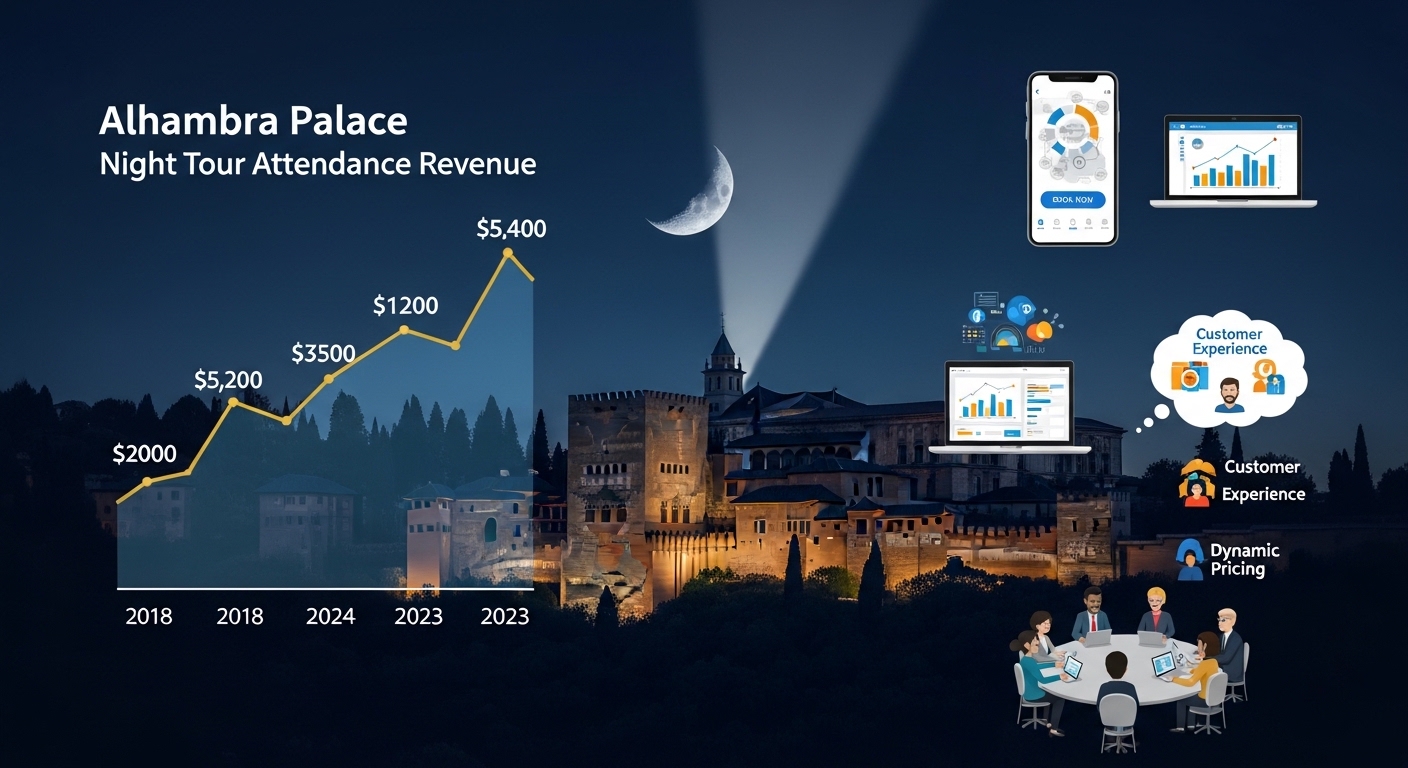
On a warm summer evening in Granada, as the sun sinks behind the Sierra Nevada, a quiet transformation begins. The crowds thin, the air cools, and the ancient walls of the Alhambra Palace glow softly under carefully placed lights. For a limited number of visitors, the experience alhambra palace night tour attendance revenue feels almost private—intimate, immersive, and unforgettable.
This is not just a cultural moment. It is also a masterclass in value creation. The story of alhambra palace night tour attendance revenue reveals how heritage, scarcity, and smart pricing can combine to produce sustainable income without sacrificing authenticity. For entrepreneurs, founders, and strategic thinkers, the lessons hidden in these moonlit courtyards are surprisingly modern.
The Economic Power of Night at a World Heritage Site
Daytime visits to historic landmarks are often about volume. Night tours, however, are about depth. The Alhambra’s evening access model demonstrates how extending operating hours—without expanding physical capacity—can unlock entirely new revenue streams.
From a business perspective, night tours monetize unused time. The palace already exists, the maintenance staff is already present, and the infrastructure is largely in place. By offering a premium experience after dark, the site increases per-visitor value rather than raw attendance numbers. This approach reduces strain on the monument while enhancing profitability, a balance many businesses struggle to achieve.
For modern enterprises, the relevance is clear: growth does not always require more customers. Sometimes, it requires offering the right customers a more meaningful experience.
How Scarcity Shapes Alhambra Palace Night Tour Attendance Revenue
One of the defining features of the night tour is its limited availability. Tickets are capped, dates are fixed, and access is tightly controlled. This scarcity is not accidental; it is strategic.
Visitors are not simply buying entry; they are securing a rare opportunity. This emotional shift supports higher pricing and drives demand through anticipation rather than advertising pressure. The result is consistent sell-outs, predictable income, and strong brand equity.
For founders and product leaders, the takeaway is powerful. Artificial abundance often weakens value. Controlled access, when aligned with quality, can strengthen both brand trust and revenue stability.
Attendance Patterns After Dark and Their Revenue Impact
Night tour attendance follows a different rhythm than daytime visits. Rather than families and large tour groups, the evening audience tends to include couples, cultural enthusiasts, and higher-spending travelers. This shift directly influences revenue dynamics.
Average spend per visitor increases, not only through ticket pricing but also through related services such as guided experiences, cultural storytelling, and premium add-ons. Attendance numbers may be lower, but total yield per slot is often higher, making the night model economically efficient.
This principle mirrors subscription-based or premium-tier business models in tech and services, where fewer users generate a disproportionate share of total revenue.
A Closer Look at Revenue Dynamics
To understand how alhambra palace night tour attendance revenue differs from daytime operations, it helps to compare the core mechanics side by side.
| Aspect | Day Tours | Night Tours |
|---|---|---|
| Visitor Volume | High | Limited |
| Ticket Pricing | Standard | Premium |
| Experience Length | Short, fast-paced | Slower, immersive |
| Average Spend per Visitor | Moderate | High |
| Operational Strain | Higher | Lower |
This contrast highlights an important insight: premium experiences do not need mass scale to be financially meaningful. They need precision.
Cultural Storytelling as a Revenue Multiplier
The Alhambra’s night tours are not just quieter versions of daytime visits. They are reimagined narratives. Lighting emphasizes architectural details, guides slow the pace, and the atmosphere invites reflection.
This is storytelling as strategy. By reframing the same physical space through a different emotional lens, the palace creates a distinct product. Attendance revenue grows not because the monument changes, but because the story does.
For content-driven businesses and tech platforms alike, this reinforces the importance of context. The same product, delivered differently, can justify a higher price point and deepen customer loyalty.
Balancing Preservation with Profitability
One of the most impressive aspects of the night tour model is its restraint. Attendance limits protect fragile spaces, while higher ticket prices offset reduced volume. This balance ensures long-term sustainability, both financially and culturally.
In a world where overuse often leads to burnout—of systems, staff, or physical assets—the Alhambra offers a counterexample. Growth is measured, intentional, and aligned with core values. For entrepreneurs navigating scale, this is a reminder that not all growth is healthy growth.
Lessons for Entrepreneurs and Founders
The success of alhambra palace night tour attendance revenue is not about tourism alone. It reflects universal principles that apply across industries. Premium access works best when it feels earned. Scarcity must be genuine, not manufactured. And pricing should reflect experience, not just cost.
Founders building digital products, event-based businesses, or membership communities can draw inspiration from this model. Night tours show how to increase margins without increasing noise, and how to protect brand integrity while still pursuing profit.
The Strategic Role of Timing in Revenue Design
Timing is often overlooked in business strategy, yet the Alhambra’s approach places it at the center. Night changes perception. It slows behavior, heightens emotion, and encourages presence. That psychological shift supports higher willingness to pay.
Similarly, businesses that rethink when customers engage—not just how—can uncover hidden value. Limited-time access, off-peak exclusives, or after-hours services often outperform traditional extensions because they feel intentional rather than convenient.
Why the Model Endures
Decades after its introduction, the night tour remains one of the most sought-after experiences in Granada. Its endurance proves that well-designed revenue streams do not need constant reinvention. They need clarity of purpose.
By respecting both the monument and the visitor, the Alhambra has built a system where attendance revenue supports preservation, and preservation enhances demand. It is a virtuous cycle that many modern ventures aspire to but rarely achieve.
Conclusion
The story of alhambra palace night tour attendance revenue is ultimately a story about vision. It shows how constraints can inspire creativity, how atmosphere can become an asset, and how revenue can align with respect rather than exploitation.
For entrepreneurs and leaders searching for sustainable growth, the lesson is simple yet profound: sometimes the most profitable move is not to add more—but to dim the lights, slow the pace, and let value speak for itself.