










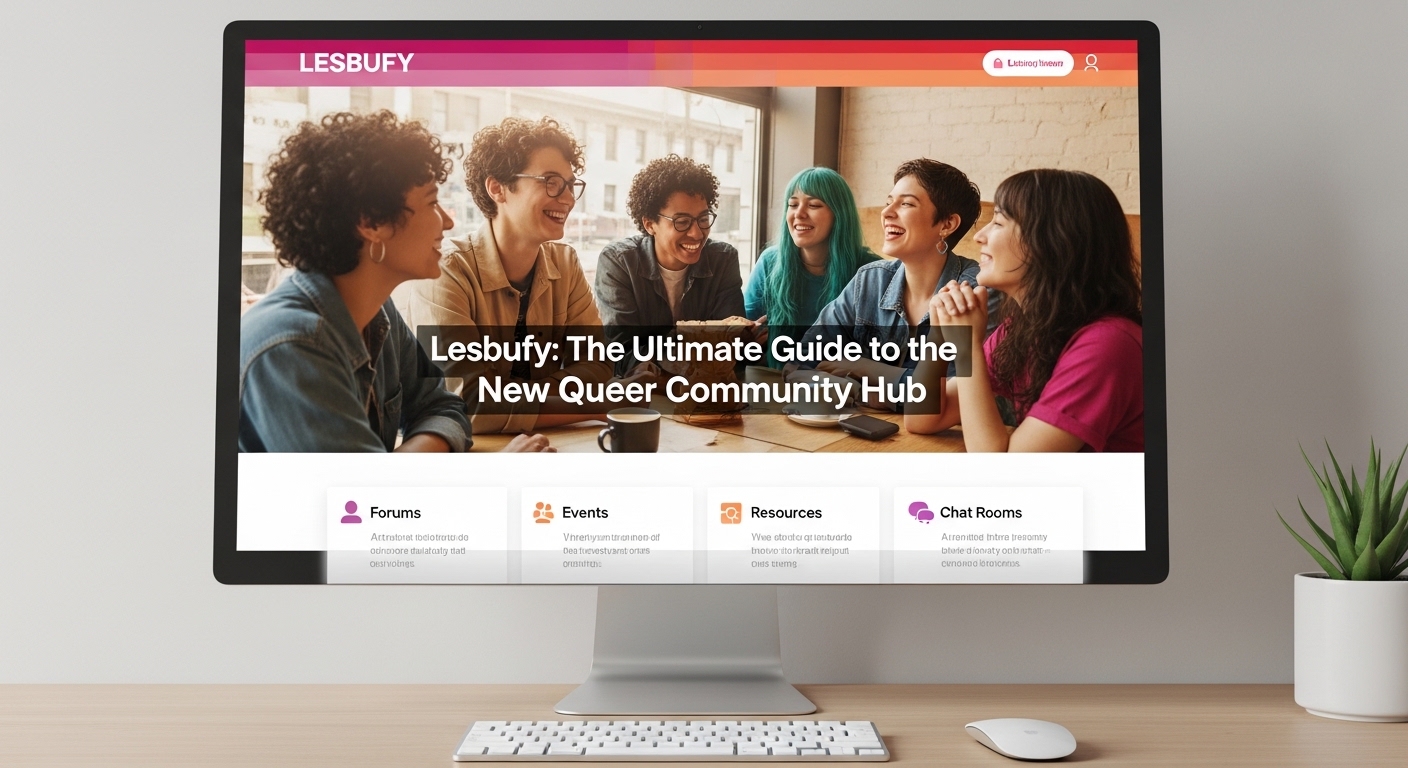
It usually starts the same way. A founder notices a gap that everyone else seems to overlook. Not a massive market failure, not a headline-grabbing disruption, but a subtle disconnect between how people want to connect and what existing platforms actually offer. That moment of quiet realization is where lesbufy enters the conversation.
In a digital world dominated by loud brands, viral trends, and aggressive growth tactics, lesbufy represents something different. It is not built around constant notifications or endless scrolling. Instead, it reflects a growing demand for intentional digital spaces—places where identity, belonging, and conversation feel less transactional and more human. This shift matters deeply to entrepreneurs, tech readers, and founders who are rethinking how platforms should serve people rather than simply capture attention. What makes lesbufy interesting is not just what it does, but what it signals about where digital culture is heading next.
Understanding Lesbufy in a Changing Digital Landscape
To understand lesbufy, it helps to look at the environment that made it possible. Over the past decade, digital platforms have optimized relentlessly for scale. Algorithms reward speed, outrage, and constant engagement. While this model has produced massive businesses, it has also created fatigue. Users are more aware than ever of how their attention is monetized, and many are actively searching for alternatives.
Lesbufy emerges from this context as a concept shaped by restraint. Rather than trying to be everything to everyone, it focuses on curated interaction, identity-driven communities, and meaningful exchange. The value proposition is not volume but relevance. For tech-savvy audiences, this approach feels like a response to years of digital excess.
From a founder’s perspective, this is a powerful signal. Markets mature when users begin demanding quality over quantity. Lesbufy aligns with that maturity by prioritizing depth, trust, and clarity of purpose over rapid expansion.
Why Lesbufy Resonates With Modern Entrepreneurs
Technology has never been more accessible, yet building something that truly stands out feels harder than ever. Lesbufy resonates because it reframes success. Instead of chasing the largest possible user base, it suggests that smaller, more aligned communities can generate stronger loyalty and longer-term value.
This philosophy reflects a broader shift in startup thinking. Sustainable growth is replacing hypergrowth as a guiding principle. Founders are more cautious about burning capital and more focused on building products that users genuinely want to keep using. Lesbufy fits neatly into this mindset by emphasizing intentional design and clear boundaries.
It also challenges entrepreneurs to think differently about metrics. Engagement is measured not just by clicks or time spent, but by the quality of interaction. For builders who care about product integrity, this is an appealing alternative to traditional platform economics.
The Real-World Relevance of Lesbufy
The relevance of lesbufy becomes clearer when you observe how people behave online today. Many users maintain multiple digital identities across different platforms, each serving a specific purpose. One space for professional networking, another for entertainment, another for private conversations. Lesbufy reflects this fragmentation by offering a more focused environment rather than a catch-all solution.
In practical terms, this means users know why they are there and what they can expect. That clarity reduces friction and increases trust. For communities built around shared values or experiences, this kind of structure is especially valuable. It creates a sense of psychological safety that larger, more chaotic platforms often struggle to provide.
From a business standpoint, this relevance translates into retention. When users feel understood, they are more likely to stay. Lesbufy’s approach acknowledges that long-term success is built on consistency, not constant reinvention.
How Lesbufy Differs From Traditional Platforms
The difference between lesbufy and traditional digital platforms can be summarized in mindset rather than features. Where many platforms optimize for maximum exposure, lesbufy optimizes for meaningful presence. This distinction may seem subtle, but its implications are significant.
Traditional platforms often encourage users to perform for an audience. Likes, shares, and follower counts create visible hierarchies. Lesbufy, by contrast, minimizes performative pressure and shifts attention toward conversation and connection. This makes participation feel less like broadcasting and more like belonging.
For tech readers, this difference highlights an important design lesson. Technology shapes behavior. When platforms reward noise, users become noisy. When platforms reward thoughtfulness, users slow down. Lesbufy demonstrates how intentional design choices can influence culture at scale, even within smaller ecosystems.
A Strategic View: Lesbufy and Platform Sustainability
Sustainability is one of the most pressing concerns in the tech industry today. Platforms rise quickly, but many struggle to maintain relevance once novelty fades. Lesbufy approaches sustainability by aligning incentives between the platform and its users.
Instead of relying heavily on advertising or data extraction, the model emphasizes value creation through community strength. This does not mean monetization is ignored; rather, it is approached carefully. Revenue strategies are designed to support the user experience instead of undermining it.
The table below highlights how this strategic positioning compares with more conventional platform models.
| Aspect | Traditional Platforms | Lesbufy Approach |
|---|---|---|
| Core Focus | Scale and reach | Depth and relevance |
| User Experience | Algorithm-driven | Community-driven |
| Growth Strategy | Rapid expansion | Intentional growth |
| Monetization | Ads and data | Value-aligned models |
| Long-Term Risk | User fatigue | Community resilience |
This comparison illustrates why lesbufy appeals to founders thinking beyond short-term wins. It offers a framework for building platforms that age gracefully rather than burning out.
Lesbufy as a Signal of Cultural Change
Beyond business strategy, lesbufy represents a cultural shift. Users are becoming more selective about where they spend their digital time. Privacy concerns, mental health awareness, and a desire for authenticity are reshaping expectations.
Lesbufy responds to these concerns by creating an environment that feels deliberate rather than overwhelming. It acknowledges that not every interaction needs to be public, optimized, or permanent. This resonates strongly with users who are tired of feeling like products rather than participants.
For entrepreneurs, recognizing this cultural change is critical. Technology does not exist in a vacuum. Platforms succeed when they align with the emotional and social realities of their users. Lesbufy’s growing relevance suggests that the future of digital interaction may be quieter, slower, and more intentional.
Lessons Founders Can Learn From Lesbufy
Even for those not directly involved with lesbufy, there are valuable lessons to extract. One of the most important is the power of constraint. By limiting scope, platforms can deliver clearer value. This goes against the instinct to add features endlessly, but it often leads to better outcomes.
Another lesson is the importance of trust. Lesbufy’s emphasis on community norms and respectful interaction shows that users respond positively when platforms take responsibility for the environments they create. Trust is not a marketing message; it is a product outcome.
Finally, lesbufy reminds founders that differentiation does not always require radical innovation. Sometimes it means revisiting overlooked principles and applying them with discipline. In a crowded market, clarity can be more disruptive than novelty.
Looking Ahead The Future Potential of Lesbufy
As digital ecosystems continue to evolve, lesbufy occupies an interesting position. It is not competing head-on with massive social networks, nor is it confined to a niche experiment. Instead, it sits at the intersection of community, technology, and cultural awareness.
Its future potential lies in adaptability. As user expectations change, platforms like lesbufy that are built on flexible, human-centered principles are better positioned to respond. This makes it a compelling case study for anyone interested in the long-term trajectory of digital products.
For tech readers and founders alike, watching how lesbufy develops offers insight into broader trends shaping the industry. It suggests that the next generation of successful platforms may look very different from the giants of the past.
Conclusion
Lesbufy is not loud, and it is not trying to be. Its strength lies in its restraint and its understanding of modern digital fatigue. By prioritizing meaningful connection over endless engagement, it reflects a growing desire for platforms that respect users as people, not metrics.
For entrepreneurs and founders, lesbufy offers more than a concept; it offers a perspective. It challenges assumptions about growth, success, and value creation in the digital age. As the tech industry continues to mature, ideas like lesbufy may well define what sustainable innovation looks like.